Apple Podcasts Is Changing How Shows Get Discovered
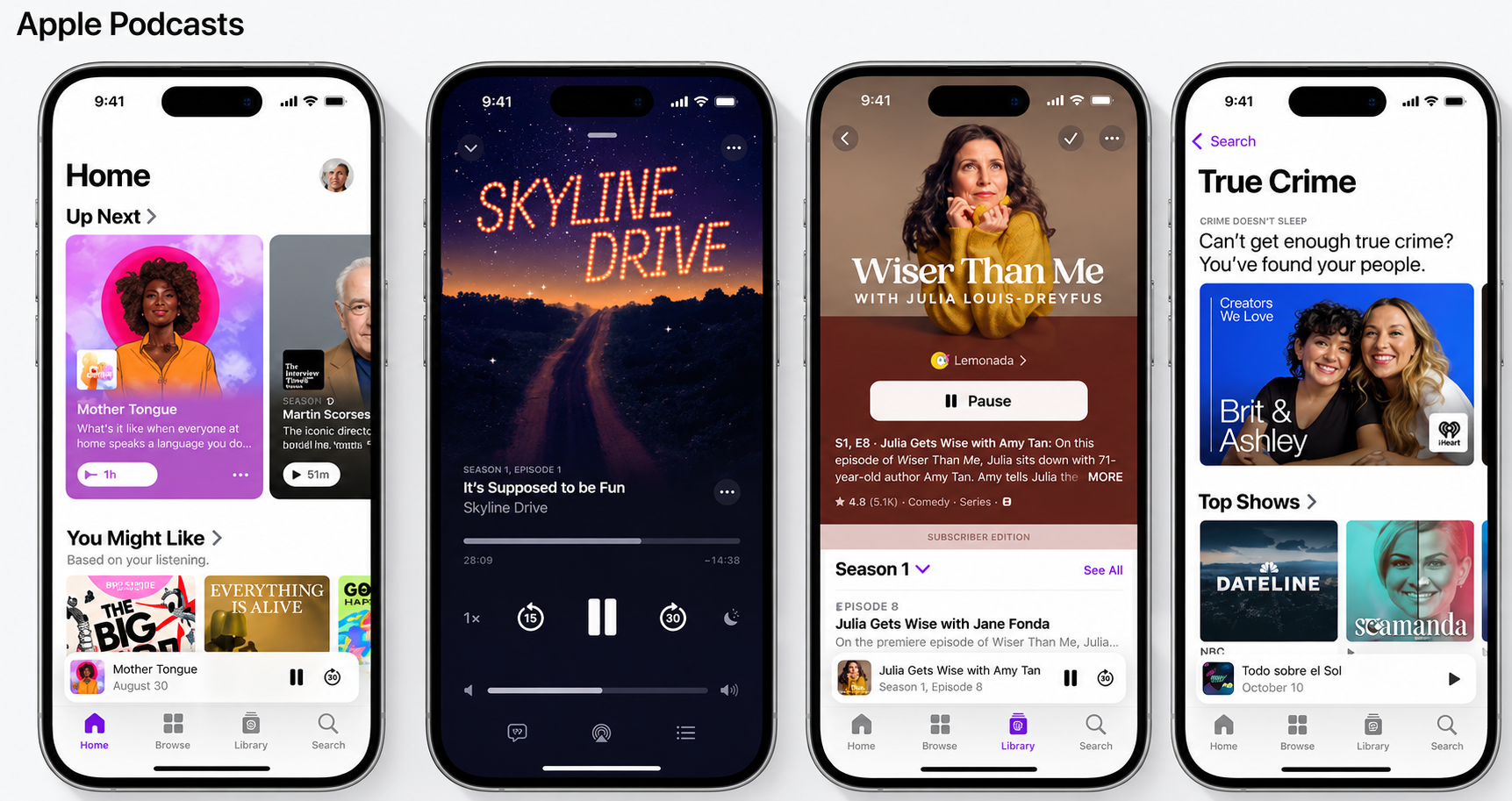
Finding a podcast you want to listen to is easy. Finding a podcast you did not know existed is much harder, and that difference is why discovery matters so much to creators. A show can have a strong host, an interesting idea and genuinely useful episodes, but none of that guarantees that the people who would enjoy it will ever come across it. The challenge is not only making something worth listening to; it is getting it in front of the people most likely to listen.
That is what makes a reported change to Apple Podcasts worth watching. Podnews reports that Apple has moved away from country-specific recommendations that previously appeared in parts of the Home and New sections of the app, with users instead seeing a more personalised experience based on different types of listener behaviour. For listeners, that could simply mean different recommendations. For creators, however, it could change how a new show gets its first meaningful audience.
So, what is actually changing?
Apple has long used editors to decide which shows, episodes and channels deserve attention, and its current creator documentation still describes editorial curation across the service. So this is not simply a story about Apple replacing human editors with algorithms. Rather, the reported change appears to be about how much of the discovery experience is being shaped around the individual listener.
That distinction matters because an editor and a recommendation system can make very different decisions about the same show. An editor can decide that a new podcast deserves attention because the idea is interesting, the timing is right or the subject is culturally relevant, even when the show has little audience data. A recommendation system, meanwhile, is trying to predict what a particular listener is likely to enjoy based on what it already knows about them. One can introduce something unfamiliar; the other is designed to become increasingly accurate at matching existing interests with content.
Why this matters for new shows
The difference becomes particularly important when a podcast is still trying to find its audience. A new show may have an excellent host and a strong concept, but Apple does not immediately know which listeners are most likely to care about it. There may not yet be enough listening behaviour or engagement to connect the show with a particular audience.
That creates a difficult early-stage problem: how do you get discovered before you have enough audience behaviour for the platform to understand who should discover you?
This is where editorial curation can be valuable. An editor does not necessarily need thousands of existing listeners to decide that a show deserves attention. If that exposure brings in new listeners, the show then starts generating the signals that personalised systems can use to make future recommendations.
Discovery becomes more of the creator's job
This does not mean personalised recommendations are bad for creators. In fact, putting a relevant show in front of someone who is likely to enjoy it can be far more valuable than reaching a large but uninterested audience. The bigger change is that creators may have less reason to think of platform discovery as something they can simply wait for.
Instead, they need to think more deliberately about creating the first audience.
Apple already points creators towards accurate metadata, while listener behaviour and engagement can influence discovery through search. At the same time, the process does not have to begin inside Apple Podcasts. Short-form video, collaborations, newsletters, guest appearances, communities and social sharing can introduce a show to people who may eventually become regular listeners.
The podcast app may be where someone listens, but it does not necessarily have to be where they first discover you. For smaller creators, that means building an audience outside the platform can become part of the discovery strategy itself.
The bigger question
That leads to a broader tension between relevance and discovery. Personalisation can become very good at giving listeners more of what they already enjoy, but that same system may have a harder time introducing them to something completely unfamiliar because there is less evidence that they will like it.
Editorial curation can take that risk because a human can decide that a show deserves attention before the data proves it.
For creators, that is ultimately why Apple's reported change matters. If discovery becomes increasingly personalised, getting your first 100, 1,000 or 10,000 listeners may depend less on waiting to be discovered by a platform and more on creating the initial audience that gives the platform a reason to discover you.