Bard is building a podcast app for people who listen to stories
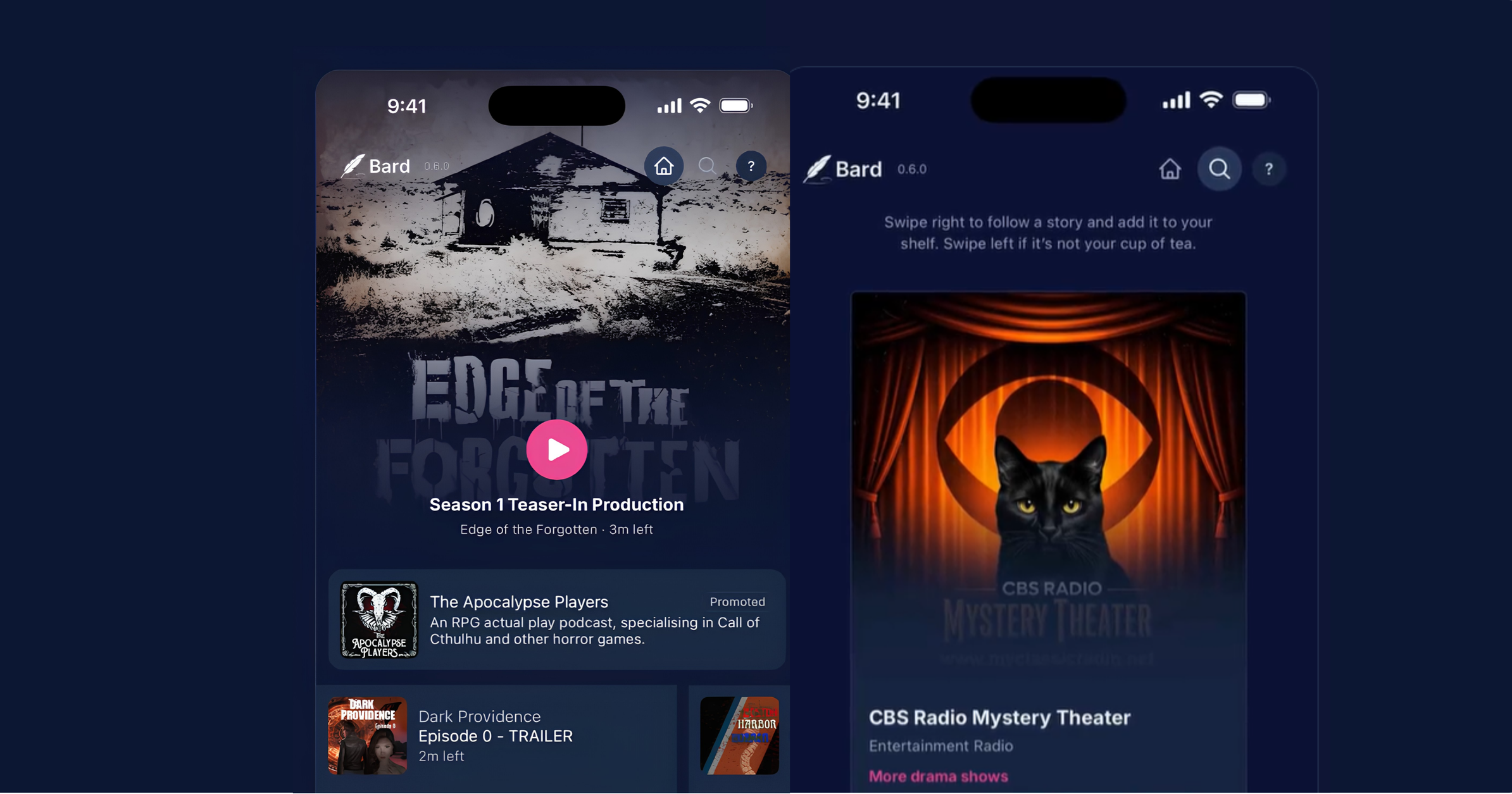
Finding a good podcast can be easy when you know what you're looking for. Finding a new audio drama, however, can be a different experience. You might want a supernatural thriller, a fantasy series with a full voice cast or a fictional world you can follow for several seasons, but general podcast categories do not always make those shows easy to discover.
Bard is being built around that problem. Launched in October 2026, the podcast player focuses specifically on audio fiction, including scripted dramas, horror serials, anthologies and actual-play shows. It is available on the Apple App Store and the web, with Android support planned, according to Podnews.
The idea is straightforward: give fiction podcasts a listening experience designed around how people follow stories, rather than making them compete for attention in an app built for every kind of audio.
General podcast apps have a blind spot
Most podcast players need to serve a wide range of interests, from daily news and interviews to comedy and investigative reporting. That breadth is useful, but fiction podcasts have different discovery needs.
A listener choosing an audio drama may care about genre, tone, the show's fictional world or whether a series has reached its ending. Episode order matters, too. Starting halfway through a story can make an otherwise promising show difficult to follow.
Bard's App Store listing describes a player built around seasons and series, with curated categories covering genres, game systems and performance styles. Its recommendation system uses listening activity and ratings to help people find other shows they might enjoy.
The app also excludes chat shows, news and true crime from its discovery focus, keeping attention on fiction-led audio.
That specialisation gives Bard a clear audience to serve. Rather than competing to be the default destination for every podcast listener, it can concentrate on people who want their next listening session to feel like starting a new book or television series.
Discovery is only half the problem
For fiction creators, getting someone to sample an episode is only the beginning. A listener who enjoys the opening chapter needs a straightforward way to continue through the series, return after a break and find another show when the current story ends.
Bard's features address some of those habits. Its episode navigation is designed for following stories in sequence, while recommendations help listeners discover related productions. The app also supports importing existing podcast subscriptions through an OPML file, allowing users to bring shows they already follow into the player.
These details matter because audio fiction often asks for a deeper commitment than a standalone interview. A listener may need to follow several episodes before the story pays off, so a confusing interface or poor episode organisation can become a barrier to finishing the show.
For creators, a player that understands those listening habits could make it easier for interested audiences to stay with a series. That is a potential benefit, though the launch alone does not establish whether Bard will deliver a meaningful increase in listening or completion rates.
Can it help creators make money?
Bard also makes creator support more visible through links to platforms such as Patreon and Ko-fi, giving listeners a clearer route to support the people producing the shows they enjoy. Podnews highlighted these links as part of the app's approach to helping fiction creators build sustainable work.
That matters in a category where production can involve writing, voice performances, sound design and editing across multiple episodes. Creators need ways to recover those costs, particularly when they are producing independently.
Direct support can help, but it depends on listeners caring enough about a show to contribute. Better discovery may bring a production to someone's attention; it cannot guarantee that the listener will become a paying supporter.
Bard's approach is therefore worth examining as a distribution strategy. The app is creating a focused place for fiction audiences to discover shows, while making it easier for those audiences to find the creators' support pages. Whether that translates into meaningful revenue will depend on how many listeners use those links and how strongly they connect with the shows.
A focused app still needs an audience
There is a trade-off in building a product for a specific category. A specialised app can offer a more thoughtful experience for its intended users, but it also needs enough of those users to make the product worth maintaining.
Bard is entering a space where creators already distribute their shows through established podcast feeds and platforms. Its opportunity lies in giving fiction listeners a reason to add another destination to their listening habits, especially if its recommendations help them find productions they would otherwise miss.
For independent audio drama creators, the practical question is whether the app can send them engaged listeners rather than simply offer another place where their shows are listed. For listeners, it comes down to whether Bard consistently helps them find stories they want to finish.
A dedicated player makes the promise clear. The real test is whether it becomes a place people return to whenever they need their next story.