Kenya Moves to Tax YouTube Creator Earnings
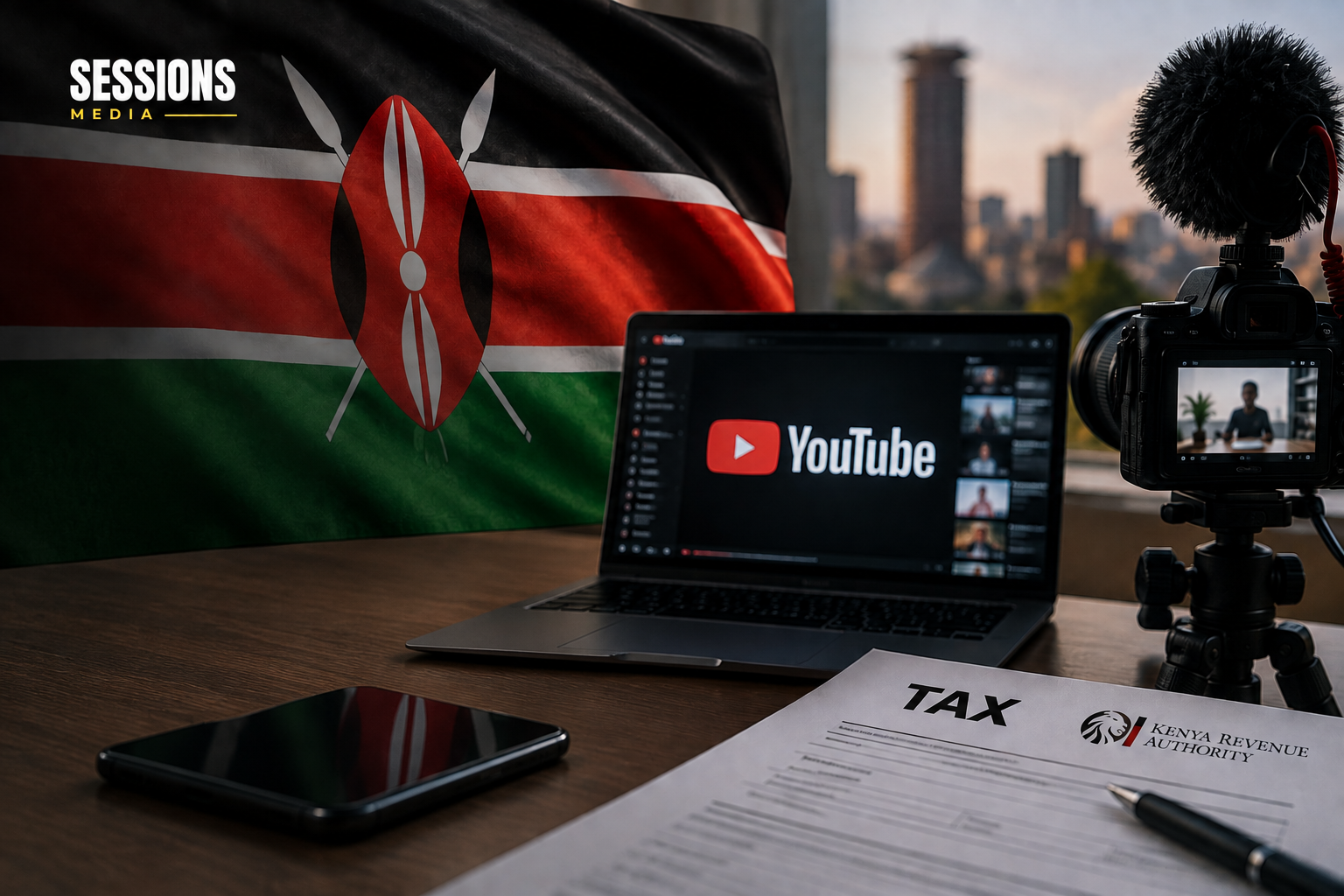
Kenyan YouTubers are about to start seeing a tax deduction before their YouTube money reaches them.
Google has confirmed that it will withhold 5% from finalised YouTube earnings for creators based in Kenya, beginning with September 2026 earnings paid in October. Creators must submit a valid Kenyan PIN by October 1, or their payments may be held until their tax information is verified. Google’s YouTube tax guidance for Kenya
The tax itself is not new. Kenya has applied a 5% withholding tax to digital content monetisation for resident creators since July 2023. What has changed is how directly the tax is being collected: Google will now deduct it from YouTube earnings before paying creators.
That puts YouTube directly into Kenya's digital tax collection system, turning the platform from simply a place where creators make money into part of the infrastructure through which that income is reported and taxed.
The money will come out before creators get paid
For a creator with KSh100,000 in finalised YouTube earnings, a 5% withholding would mean KSh5,000 is withheld before the payout, before any other applicable deductions.
Google says it will withhold the tax each month and report information to the Kenya Revenue Authority, including the creator's gross payments subject to withholding tax, the amount withheld, their Kenyan PIN and address.
There is an important distinction here: the 5% should not automatically be treated as an additional 5% final tax bill.
KRA says withholding tax on digital content monetisation is generally not a final tax for resident recipients. The amount withheld can generally be claimed as a tax credit when the creator declares their income and calculates their final tax position.
So the immediate change for creators is primarily about when and how the money is collected.
Instead of receiving the full YouTube payout and dealing with the tax obligation separately, Google will collect the withholding at source.
Kenya already has the tax framework
That distinction matters because the story is not really about Kenya suddenly deciding that YouTubers should pay tax.
KRA lists digital content monetisation among payments subject to withholding tax, with a 5% rate for resident persons and 20% for non-residents. The 5% rate for digital content monetisation has been in effect since July 2023.
The new development is that Google is now putting that existing obligation directly into the YouTube payout process.
That makes the change more consequential for creators because the platform itself becomes part of the collection and reporting chain.
Creators are questioning how it is being introduced
The Digital Content Creators Association of Kenya has raised concerns about the rollout and called for the withholding tax to be suspended pending further engagement with the government and relevant agencies. The association has raised issues around consultation and the way the tax is administered.
The disagreement is therefore not simply about whether income generated from digital content can be taxed. It is also about how that tax works for creators whose businesses can have irregular revenue and significant operating costs.
And because the withholding happens before the creator receives the payout, it changes their cash flow immediately, even where the amount withheld can later be credited against their final tax liability.
This is bigger than YouTube
The interesting part of this development is what it says about the changing relationship between creators, platforms and governments.
YouTube is increasingly part of the financial infrastructure of the creator economy. It collects advertising revenue, calculates creator earnings and sends payments across borders. Now, in Kenya, it is also collecting and reporting a portion of that income on behalf of the tax authority.
That gives governments a much clearer route into an economy that has historically been harder to track than traditional employment or business income.
For creators, it also means that being a digital business increasingly comes with the same compliance questions faced by other businesses: how much are you earning, where is that income coming from, what expenses can you account for and how much tax ultimately do you owe?
Kenya's YouTube rollout is a concrete example of that shift. The important change isn't that creators suddenly have a tax. It's that the platform is now taking a role in collecting it.