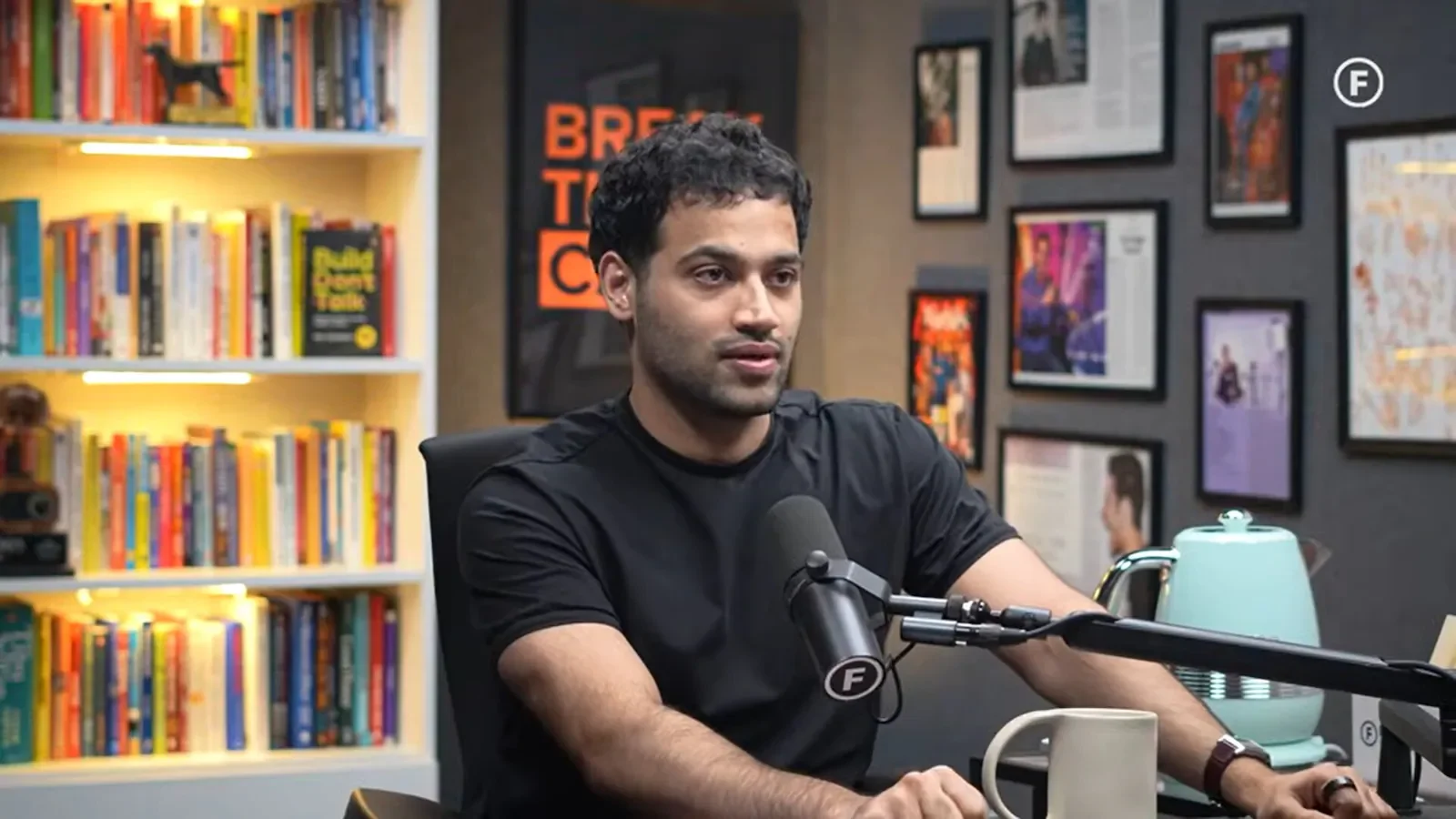
Steven Bartlett barely had time to enjoy the milestone. Earlier this month, The Diary of a CEO announced that it had overtaken Joe Rogan in a comparison of YouTube subscribers. Less than two weeks later, Raj Shamani, the host of Figuring Out, had passed them both.
In its 13 November announcement, Shamani’s team reported 22 million subscribers, ahead of the figures it cited for Bartlett at 21.9 million and Rogan at 21.2 million. The snapshot marks a significant achievement for the India-based entrepreneur, whose career spans consumer products, public speaking, publishing and media.
It also exposes a limitation in how podcasting’s biggest names are discussed. Familiarity with the personalities most visible in US and UK coverage offers an incomplete picture of the industry. Shamani had already built a substantial audience before this comparison attracted wider attention.
His business experience began in Indore, in central India. A 2021 profile in The New Indian Express describes him joining the family’s chemicals business as a teenager after his father became ill. Making and selling cleaning products gave him early experience of understanding customers, communicating value and finding an audience.
Public speaking and online content became further outlets for those skills. His work expanded into business and finance content, while his later ventures included House of X, which helps creators develop consumer brands. He also wrote Build, Don’t Talk, published by Penguin.
That background helps explain the commercial thinking behind Figuring Out. Shamani approaches the programme as part of a wider business, with the host’s curiosity connecting subjects that might otherwise sit in separate categories.
In an October Forbes profile based on an interview with him, Shamani described wanting access to people who could explain how successful companies and careers were built. Early recordings were made on his phone, sometimes under a blanket to reduce the echo.
The show’s scope has since expanded across business, health, relationships and public life. Guests have included Bill Gates, Emmanuel Macron and MrBeast, according to his South Asian Trailblazers interview. That range creates several entry points for viewers while retaining a recognisable purpose: learning from other people’s experience.
The production process is deliberate too. Shamani told Forbes that his team studies conversations across social platforms, identifies emerging questions and develops thumbnail concepts before deciding which guests could best address them.
That approach puts audience curiosity inside the commissioning process. The team considers what people want answered before building an episode around someone available to interview. It offers a useful explanation of the operation behind the growth, although no single technique can account for an audience of this size.
His signing with WME adds support for developing opportunities outside India. International expansion builds on an established business; it does not confer legitimacy on the work that preceded it.
The subscriber comparison still needs precision. Bartlett’s original announcement covered shows appearing on YouTube’s US weekly podcast chart. Shamani’s broader claim did not explain an equivalent comparison set. Meanwhile, YouTube’s weekly chart ranks watch time, excluding clips and Shorts, rather than subscribers.
Those distinctions help readers understand the achievement without diminishing it. Subscriber totals cannot establish who has the largest audience across every listening platform or the most profitable business.
What they demonstrate here is considerable scale. Shamani’s success gives publishers, advertisers and industry observers a reason to widen their reference points. A global view of podcasting needs to account for major audiences and businesses wherever they are built.