This Week in Podcasting - Podcast News 6 August
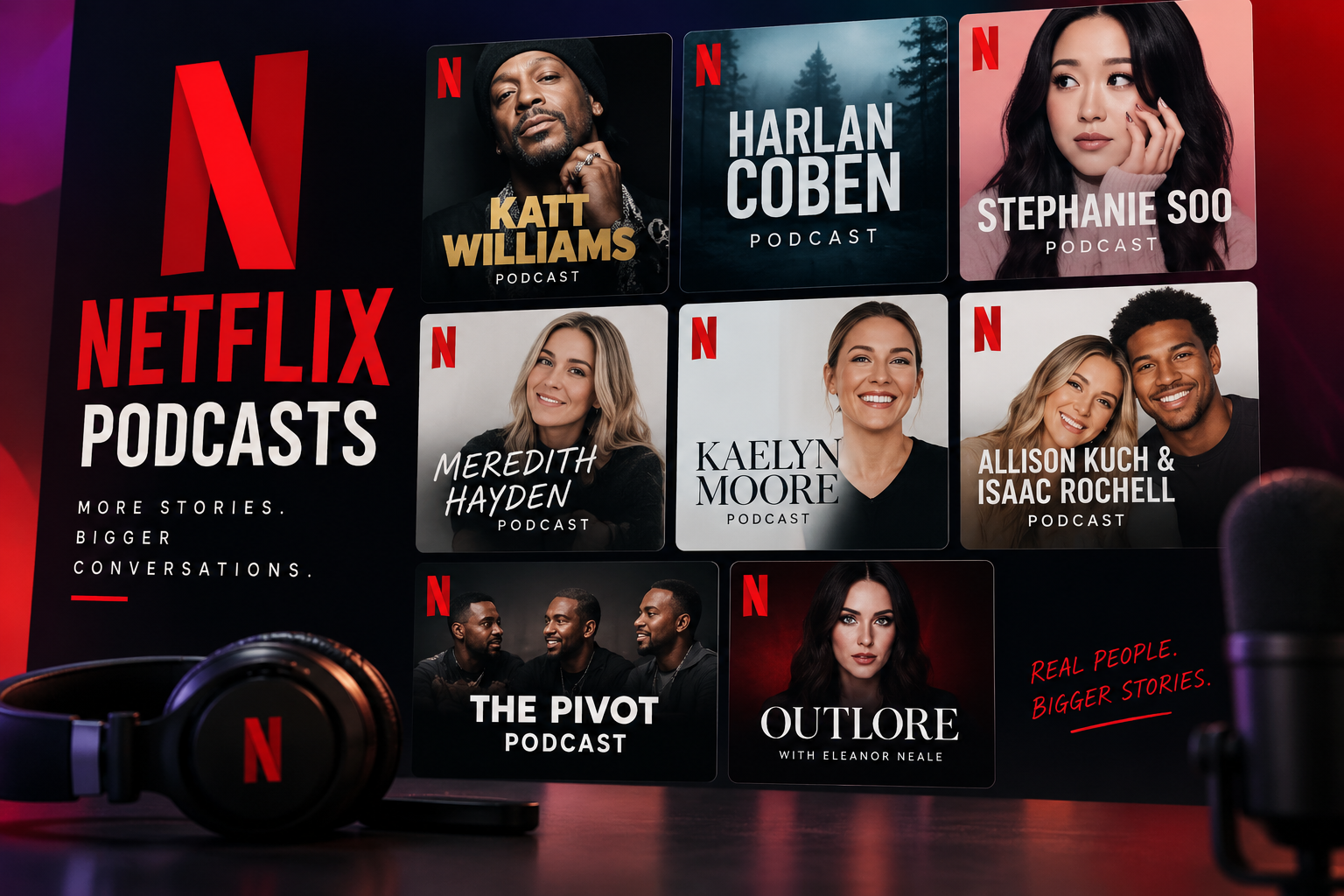
Podcasting had a busy first week of September, with Netflix expanding its original slate, new data exposing the gap between YouTube’s public and engaged views, and the industry gathering in Jakarta to debate what podcasting looks like beyond audio.
Here are five developments that stood out from this week.
Netflix is doubling down on podcasts
Netflix is moving further into podcasts rather than treating them as a side experiment.
On September 1, the company announced that it was renewing its entire original podcast lineup and adding new shows from names including Katt Williams and author Harlan Coben. It also announced new Netflix originals from podcast talent across true crime, sports, comedy and food.
Netflix says it now has more than 60 podcasts available on the platform.
The significance is less about the number than the strategy. Netflix is building a catalogue around personalities and formats that can live alongside its wider entertainment business, giving podcasts a place inside a platform that already controls a huge global video audience.
YouTube's new view count is already causing problems
The first independent analysis of YouTube's new public view metric arrived this week, and the numbers show why podcast publishers are uneasy.
Podtrac analysed 84.2 million views from podcast YouTube channels and found that Engaged Views represented 64% of public Views for podcast episodes and 58% for other podcast-related videos.
YouTube changed its definition of a public view on August 24 so that a view can count from the first frame, including when a long-form video autoplays. Engaged Views, which require a viewer to watch beyond that initial frame or click to watch, remain available through YouTube's analytics tools but are no longer displayed publicly.
Podtrac says it will use Engaged Views for its YouTube podcast rankings.
The issue is becoming harder to ignore as YouTube becomes a central podcast platform. If two shows report very different-looking numbers because platforms define a “view” differently, advertisers and audiences need more context before comparing them.
Podcast advertising is growing in Australia
Australian podcast advertising delivered another strong quarter, according to new IAB Australia figures.
Podcast advertising reached A$40 million in the June quarter, up 13.1% year over year. For the full 2026 financial year, podcast advertising grew 10.1%, accounting for 40% of Australia's A$353 million audio advertising market.
The growth is encouraging, but another IAB Australia report released around the same time points to a problem underneath it: advertisers still lack consistent standards for measuring impact across different media channels.
That puts podcasting in an interesting position. The money is growing, but the measurement systems needed to prove exactly what that money is delivering are still being worked out.
Asia's podcast industry put itself on display
The Asia Podcast Awards announced its 2026 winners on September 3 during Radiodays Asia in Jakarta. Twenty-six winners were selected from 70 finalists across 23 categories, covering everything from news and business to sport, culture and branded podcasts.
The awards are more than a ceremony. They provide a useful snapshot of the region's podcast industry, with independent and major publishers competing alongside one another.
Radiodays Asia also devoted a full day to podcast creators, with sessions focused on listening trends, markets and YouTube podcast strategy. The event reinforced how quickly the business is moving beyond traditional audio distribution.
Apple quietly makes its web player more useful
Apple updated its embedded Podcasts player this week, adding support for video and trailers on websites.
The change is relatively small, but it fits a much bigger shift. Podcast publishers increasingly need one piece of content to work across audio feeds, video platforms, websites and social media.
There is one catch: plays from Apple's web embed are not displayed in Apple Podcasts Connect analytics, although they remain available through the podcast host's own analytics.
The update is another sign that podcasting's infrastructure is being rebuilt around a medium that is no longer purely audio.
The week therefore left podcasting with a familiar tension. The audience and advertising opportunity are expanding across platforms, but the infrastructure for distributing, measuring and monetising that audience is still catching up.