Who Really Owns Your Favourite Celebrity Podcasts?
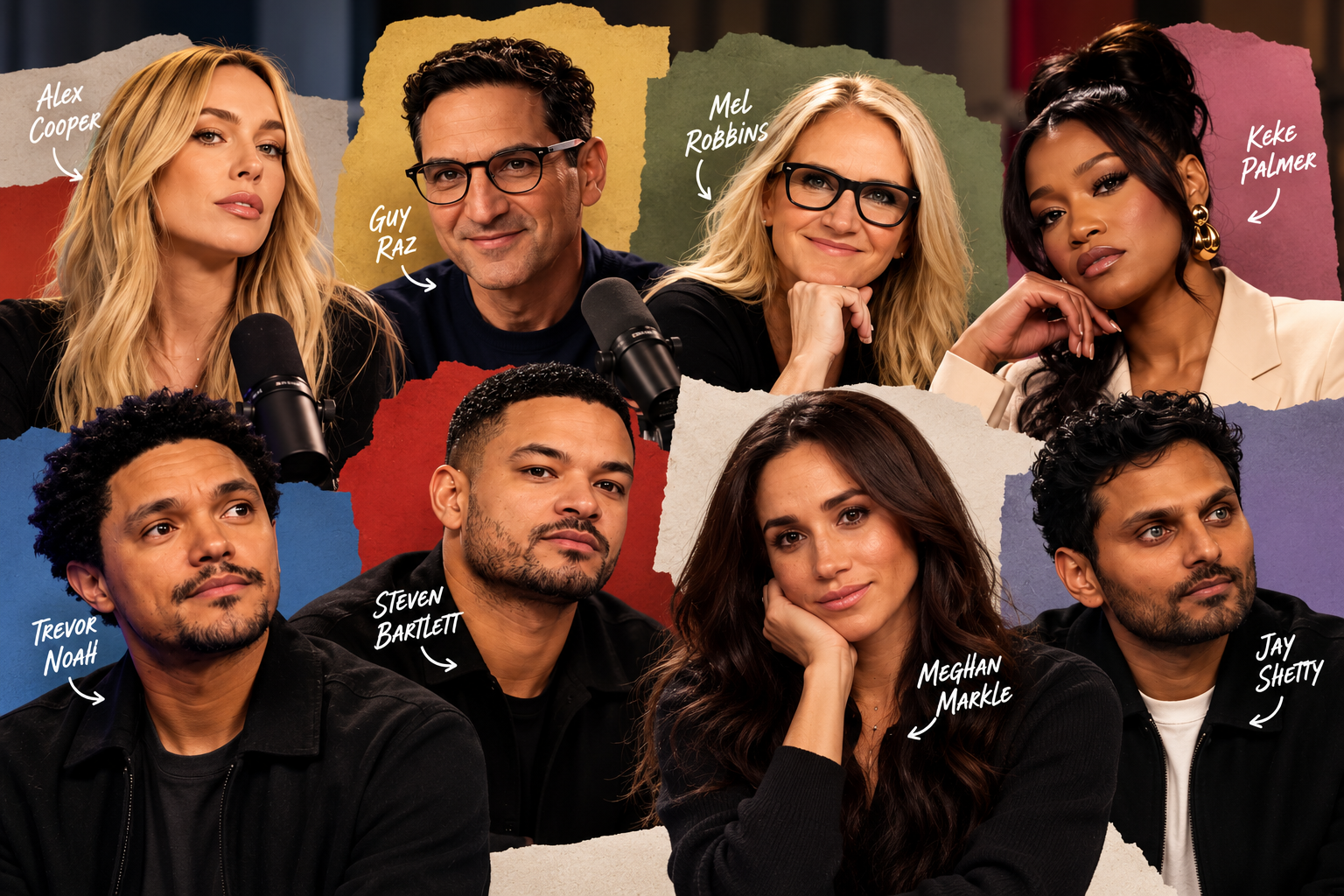
Celebrity podcast deals have become a multimillion-dollar business. Platforms are competing for recognisable personalities, advertisers are investing in loyal audiences, and creators are building media companies around shows that began with little more than a microphone.
Yet behind every headline-grabbing agreement is a question that rarely gets answered: who actually owns the podcast?
In September 2026, How I Built This creator Guy Raz announced he was acquiring full ownership of the entrepreneurship podcast from NPR, a decade after launching it. At the same time, Raz unveiled a partnership with Vox Media to expand the franchise into video, live events and additional programming.
The financial terms weren't disclosed, but the announcement illustrated an increasingly important distinction in podcasting. Owning a show and partnering with a media company to monetise it are two very different things.
A multimillion-dollar deal doesn't always mean a sale
Consider Alex Cooper's Call Her Daddy, one of podcasting's most recognisable franchises. After her partnership with Spotify, Cooper signed a multiyear agreement with SiriusXM in August 2024. The arrangement gave SiriusXM exclusive advertising sales and distribution rights, alongside commercial rights involving Cooper's Unwell Network.
Importantly, SiriusXM's announcement did not describe an outright acquisition of Call Her Daddy. Cooper has since developed a broader media business through Unwell and Trending, demonstrating how podcast personalities can expand into production, talent development and entertainment ventures.
Trevor Noah's What Now? offers another example. Originally launched with Spotify in 2023, the podcast entered a new agreement with SiriusXM in June 2025, giving the company exclusive advertising sales rights while keeping the show available across major listening platforms.
These arrangements demonstrate why a distribution or advertising agreement shouldn't automatically be confused with ownership. The underlying intellectual-property rights and financial splits are not always publicly disclosed.
Why media companies want a piece of the business
For companies such as SiriusXM, Spotify and Wondery, partnering with established creators offers access to audiences that can be difficult and expensive to build from scratch.
Mel Robbins, whose The Mel Robbins Podcast has become a major force in personal development, signed a three-year agreement with SiriusXM in October 2024. The deal included advertising rights and plans for additional exclusive programming.
Robbins also operates 143 Studios, her female-led media company, which develops content beyond the podcast itself.
Keke Palmer's Baby, This Is Keke Palmer is distributed through Wondery, which is also listed as the show's creator and copyright holder on Apple Podcasts. The public credits, however, don't reveal the full contractual arrangement between Palmer and the network.
For networks, the appeal is clear: established personalities attract listeners, advertisers and opportunities for expansion. For creators, partnerships can provide production support, distribution and commercial infrastructure without necessarily requiring them to sell an entire business.
When a podcast becomes a media empire
Steven Bartlett is among the creators pursuing a more expansive business model.The British entrepreneur has built The Diary of a CEO into a major international franchise while developing businesses under his Steven.com holding company.
In September 2026, the Financial Times reported that Steven.com was valued at approximately $425 million, with Bartlett retaining more than 90% ownership. That ownership figure relates to his holding company, rather than a separately disclosed stake in The Diary of a CEO.
It also highlights an important distinction between licensing and equity. Licensing allows a media company to use, distribute or monetise content under agreed terms. Equity, meanwhile, gives an investor an ownership stake in a company, potentially allowing them to benefit from its future growth.
For creators, raising investment can provide capital to hire teams, develop technology, acquire businesses and expand internationally. The trade-off is that selling equity can reduce a founder's percentage ownership and introduce new investors into business decisions.
As podcast franchises grow, the commercial opportunity increasingly extends beyond advertising into intellectual property, video, live events and wider media ventures.
The power to move between platforms
Meghan Markle's Archetypes illustrates another important aspect of podcast ownership: the ability to change commercial partners. Originally released through Spotify, the podcast moved to Lemonada Media in 2024. Lemonada agreed to handle advertising sales and distribution of the existing series, while also announcing plans to develop a new show with Meghan.
The publicly announced terms did not establish a complete breakdown of ownership, but the arrangement showed how a podcast could continue under a different distribution partner.
Jay Shetty's On Purpose demonstrates the growing value of expanding across platforms. In May 2026, Spotify announced a partnership with Netflix and Shetty to bring video episodes of On Purpose to both services. Spotify also became the show's global advertising sales representative.
For creators with established audiences, these arrangements can create new commercial opportunities without necessarily requiring a transfer of the underlying podcast's ownership.
So, who really owns the podcast?
There isn't one answer.
Some podcasts are owned by production companies or networks. Others are controlled by their creators, who license distribution and advertising rights to commercial partners. Increasingly, successful personalities are also building larger businesses in which investors can purchase equity.
The distinction matters because the headline value of a podcast agreement rarely tells the full story. A creator might receive a substantial payment while retaining valuable intellectual property. Another might sell ownership in exchange for immediate capital. A third might build a company around a show and bring in investors to finance its growth.
Each approach involves different levels of control, financial risk and long-term opportunity. Guy Raz's acquisition of How I Built This brings the question into focus. After building the franchise within NPR, he is taking ownership while continuing to work with an established media partner.
As podcasting's biggest personalities negotiate increasingly sophisticated deals, the most revealing question may no longer be how much they were paid. It's what they still own when the contract ends.