How the Richest Podcasters Make Their Money
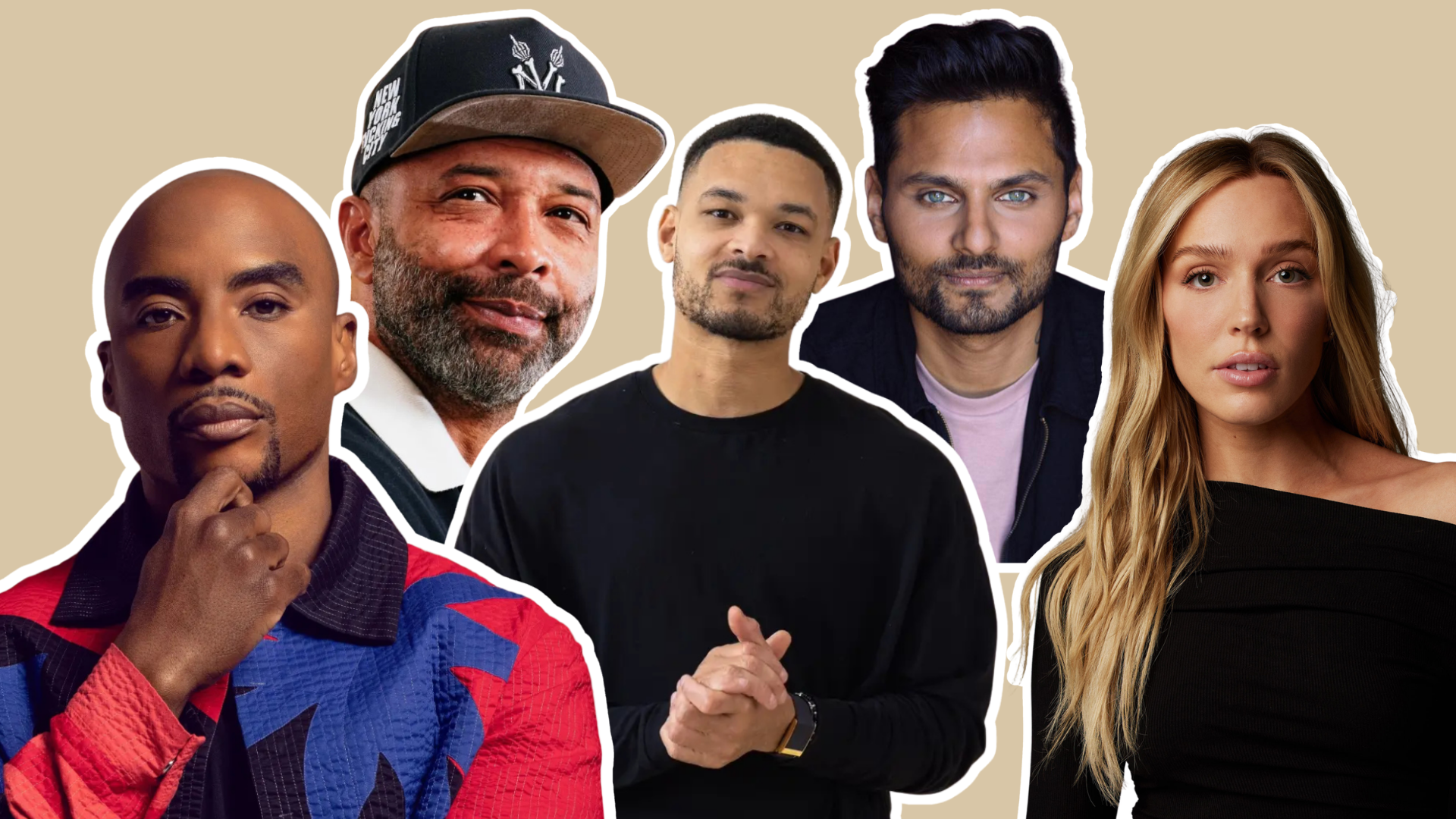
When you think about a Forbes rich list, you’re thinking old money, generational wealth. Or perhaps banking, oil or IPOs that made someone a billionaire a decade ago. That’s the world these lists have always belonged to.
Podcasters just crashed it. Forbes’ 2026 “Highest-Paid Podcasters” list isn’t a returning franchise – it’s the first one they’ve ever run. Reporter Matt Craig said the idea sat in editorial meetings for a year, waiting for the industry to earn it, and now it has: podcasting’s gone from under $100 million a decade ago to more than $9 billion a year today. Podcasters just got let into the room with actors, athletes and musicians. If you’re building a show right now, that’s the part that should actually excite you – more than any single number on the list.
So let’s talk numbers. Joe Rogan tops it at an estimated $82 million. TBPN’s John Coogan and Jordi Hays are right behind him at $70 million. Steven Bartlett’s Diary of a CEO sits at $45 million, Ashley Flowers’ Crime Junkie at $42 million. Add up the top 20 and you get $638 million.
If you’re building a show, a list like this does something to you – it makes the whole thing feel possible. That could be me. And for a tiny percentage of people, eventually, it will be. But honestly, the number is the least interesting part. What’s worth unpacking is how it’s arriving, because “podcasting” isn’t one business model. It’s five, running at once, and this list is basically a highlight reel of who bet on which one.
The Platform Deal
This is the one everyone pictures first: a platform pays big for your audience, usually with some exclusivity attached. Rogan’s Spotify deal is reportedly worth up to $250 million over three years – though it’s loosened since, and JRE now streams on Apple, Amazon and YouTube too. Alex Cooper went from a $60M+ Spotify exclusive to a SiriusXM deal worth up to $125 million. The Kelce brothers signed with Amazon’s Wondery for $100M+; Dax Shepard got $80 million from Wondery; SmartLess landed $100M+ with SiriusXM. Jay Shetty’s On Purpose pulled in an estimated $100 million through a combined Spotify and Netflix arrangement. And Charlamagne Tha God just renewed his iHeartMedia deal for up to $200 million over five years – funding both The Breakfast Club and The Black Effect Podcast Network, which he owns 51% of – on top of a separate Netflix deal that made Breakfast Club the platform’s first-ever live daily show.
What it takes: an audience big enough that platforms actually compete for it. Nobody’s landing this on episode ten.
Can you do it? Not at nine figures, no. But the same logic runs at every scale – smaller networks like Acast or Audioboom cut versions of this deal with mid-size shows all the time. Same mechanism, way smaller number.
Getting Bought
Different animal entirely – the company itself gets acquired, not just licensed. TBPN is the case study for 2026: OpenAI bought the 11-person operation for an estimated $150 million in cash and stock. It’s not new, either – SiriusXM bought Conan O’Brien’s Team Coco for $150 million in 2022, and Bill Simmons sold The Ringer to Spotify for up to $250 million back in 2020.
What it takes: strategic value that goes beyond raw listenership. OpenAI wasn’t just buying an audience – it was buying credibility with the exact tech crowd already watching.
Can you do it? No, and that’s fine — this is an exit, not a starting strategy. But it does reframe the goal: build a company with something worth buying, not just a show with good numbers.
License It, Keep It
The middle lane, and honestly my favorite. Ashley Flowers didn’t sell Crime Junkie. She structured a $150 million deal where Tubi handles video and Red Seat Ventures handles ad sales – and she keeps full ownership of everything.
What it takes: enough leverage to negotiate your own terms instead of taking whatever a platform offers off the shelf.
Can you do it? Genuinely, yes, at any size. If you’ve ever run ads through a network while keeping your own brand, you’ve already done a mini version of this exact move.
Full Independence
Steven Bartlett owns Diary of a CEO outright. No platform telling him what to do. His wider business, Flight Story included, was valued at $425 million in a recent raise. This is the slowest model and the riskiest, but you keep everything, and the podcast becomes the flagship of something much bigger than itself.
What it takes: patience, mostly, and the discipline to reinvest instead of grabbing the first big cheque someone waves at you.
Can you do it? This is actually the most accessible model here for the long game – it needs zero permission from anyone. Just treat the show like a business from the very first episode.
Fans Pay Direct
And then there’s Joe Budden, who’s doing something none of the others are. No network deal, no platform cheque, no private equity – just him, his business partner, and 70,000+ paying Patreon subscribers, generating an estimated $20 million a year. Asked why he’s stayed independent, Budden’s answer was simple: he doesn’t like being told what to do.
What it takes: a community that actually wants the show to win, not people passively consuming it for free.
Can you do it? Yes, and this is the one within reach at a few thousand listeners, not a few million. Slower money, lower ceiling, but literally no gatekeeper standing between you and getting paid.
The Common Thread
Nobody on this list is living off one stream. Every name here is stacking two or three models at once, with sponsorships and live shows sitting underneath all five. Forbes’ own numbers bundle guarantees, revenue share, platform fees and live events together, because that’s genuinely how the money shows up.
While We’re Here…
Here’s the thing worth sitting with: this list is almost entirely American, with Bartlett basically the only non-US name anywhere near the top. So, is this really the top of global podcasting? Or is it the top of what Forbes’ network of US agents and platform execs happen to see? Podcasting is exploding well outside the US and UK. Nobody from Africa, Latin America or Asia making this list isn’t proof they’re not earning at scale, it’s a sign the measuring stick is perhaps still built entirely around Western platform deals.
While most podcasters will never make this list, and honestly, that was never the point. What actually transfers isn’t the number, it’s the model. Every single person building a show right now is already choosing between exclusivity, acquisition, licensing, independence or direct fan support, whether they’ve said it out loud or not. Knowing which one you’re actually playing matters a lot more than whatever figure sits at the end of it.